THE POWER CENTER:
Let’s Cut to the Core
It is often thought that the core solely constitutes the abdominals and low back muscles. While these two groups of muscles are a part of the core, the buck doesn’t stop there! The core is composed of the muscle groups that work together to stabilize the spine and pelvis. Some articles, books or exercise programs may even identify the Pecs and the muscles of the shoulder girdle as part of the core. For the sake of this article, I will identify the muscles of the abdominals, hip and spine as the core region and save the shoulder girdle and Pecs for another time.
The core muscles can be deep, such as the multifidus which is located under the erector spinae who run the length of the spinal column; or they can be superficial such as the rectus abdominus which warrants the coveted “six pack” appearance. Whether deep or superficial, proper training, muscular balance, CNS (Central Nervous System) firing and flexibility within the muscle groups are imperative for the core to perform optimally in any sporting event.
I am certain you have all heard the song:
The foot bone’s connected to the leg bone
The leg bone’s connected to the knee bone
The knee bone’s connected to the thigh bone….
Our bodies are connected in this harmonious way which allows us to produce fluid movement. But it is not only our bones which are connected in this harmonious manner. Our tendons, ligaments, nerves and muscles are connected as one magnificent kinetic chain which enables you to move in a powerful, dynamic and fluid way.
Everything in our bodies is connected in some way to produce movement. The core is essential in this production because every muscle within the core group is critically responsible for the necessary transfer of energy from prime movers (large groups) to stabilizers and synergistic groups (small groups) during daily activities or athletic performance. Your core is your power center in that any powerful movement you create originates within the core and is distributed outward. The power is never created in the limbs. Therefore, the more stable, strong and balanced the core group is, the more powerfully the extremities are able to contract.
Collectively, the core group aids in controlling movement, transfer of energy, shifting body weight and moving in any direction. Each movement you make begins in your core! Additionally, weight bearing stresses experienced while you exercise are distributed by the core to help protect your spine. So, not only is the core a producer of powerful movements, it is a protector from the stresses placed on the body.
The core is made of the:
Abdominal Musculature: rectus abdominis; transverses abdominis; internal oblique and external oblique.
Hip Musculature: iliopsoas; rectus femoris; Sartorius; tensor fasciae latae; pectineus; gluteus maximus, medius and minimus; semitendinosus; semimembranosus; biceps femoris; adductor brevis, longus and magnus; gemellus superior and inferior; obturator internus and externus; quadratus femoris; piriformis.
Spinal Musculature: erector spinae; quadratus lumborum; paraspinals; trapezius; psoas major; multifidus; iliocastalis lumborum and thoracis; rotatores; latissimus dorsi; serratus anterior.
As important as I believe it is to list each of the muscles within these groups in order to demonstrate a point, explaining the function of each of these muscles is beyond the scope of this article. With such an extensive list of muscles within these groups, I hope to illustrate how performing hundreds of crunches is not enough to produce a balanced, stable and powerful core.
As an exercise enthusiast or athlete, the benefits of training your core are numerous. The numerous benefits of core training include, but are not limited to:
• Increased dynamic stability
• Greater efficiency of movement in all planes
• Increased power output throughout the body
• Injury reduction via absorption of stresses placed on the body upon impact
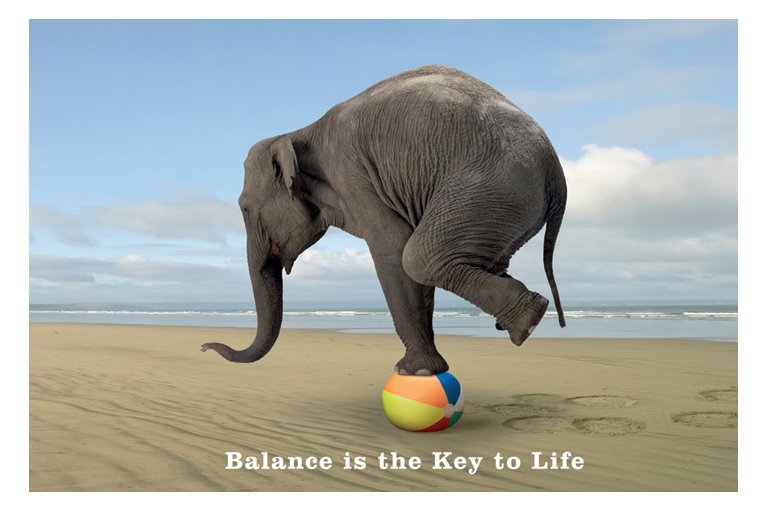
• Greater balance, control and stability
• Increased athletic performance
• Increased neuromuscular efficiency
• Proper CNS firing which facilitates greater proprioceptive awareness (your joint or body position in space)
Clearly the benefits are numerous. So how do you train your core? Where do you begin? How do you progress? What exercises do you perform if crunches are not enough? Should you purchase the Ab Rocker? Wow! So many questions! I’m glad you asked.
The fitness market is riddled with countless contraptions and quirky gimmicks all professing to accomplish a strong core or at best “six pack” abs. Believe me when I tell you that all of these contraptions and gimmicks are useless in producing strength and power within your core. Body weight exercises are sufficient when you initially begin a core training program enabling you to build a strong and stable foundation. As you progress in a step-wise fashion and are ready to increase the intensity in your core program, medicine balls, stability balls and balance boards are great tools to help you with your progression. These tools allow for greater specific movements owing to increased cross over to daily activities or sport.
A core program requires three ideals: progressive, systematic and functional. It is important to emphasize all three muscular contraction phases within your core program. These phases of contractions are concentric (shortening), eccentric (lengthening) and isometric (dynamic stabilization).
Your program should begin in a controlled environment and be challenging with necessary progressions. The program should vary by utilizing: all planes of motion, the range of motion, your body position, external resistance, length of training (sets, reps, time under tension) and frequency ( days per week).
Your exercise selection should be based initially on your ability to perform chosen exercise with the strictest of form. The exercises should become increasingly challenging as your strength and ability improves over time. You should aim to have a proprioceptively rich program and one that is safe and challenging. Your exercise selection should include multiple planes, sport specific movements for greater transfer to athletic movement patterns and should engage in a progressive functional continuum: slow to fast; simple to complex; static to dynamic.
Your program goal should be optimal levels of core stabilization and functional strength as well as a decrease in muscular imbalances. As important as it is to have a strong powerful core, it is equally important to NOT have muscular imbalances. Furthermore, your ability to create powerful movements is hindered and your injury capacity has increased tenfold in the presence of muscular imbalances!
There are several core exercises to choose from. Here are just a few to get you started on your program. Each of these exercises utilize body weight only and are performed as time under tension, meaning how long you can hold each movement. When beginning a program, just allow yourself to hold for as long as you can while maintaining your breathing and proper form. DO NOT hold your breath. As you progress, begin challenging yourself by identifying the time to be under tension i.e. One minute, two minutes, etc.
The Plank (affectionately known as bows and toes): Lay face down on the floor. Flex your ankle so that your toes are perpendicular to the floor and place your elbows and forearms on the floor. Lift your body off of the ground by stabilizing yourself on your toes, elbows and forearms. It is important to keep your shoulders directly over your elbows. Maintain a straight body line from your head to your feet. Breathe properly and hold the position with strictest form for as long as you can. Repeat two times.
Side Plank: Begin on your side with your body in a straight line, arms bent at the elbow and legs straight. Pay particular attention to your shoulder being directly above your elbow. With the free arm, hold the wrist of the stabilizing arm. Lift your body off of the floor while maintaining a straight body line from your head to your feet. Make certain you are flexing the ankle of the bottom leg so that your toes are towards your shins. This helps to create a more stable base. Breathe properly and hold the position with strictest form for as long as you can. Switch sides. Repeat two times.
Hip Bridge: Lying on your back in prone position, place your arms next to your hips and bend your knees so that your feet are flat on the floor. Raise your hips off of the floor so that only your head, shoulders and feet remain on the floor. Hold for 5 seconds and repeat for 10 repetitions, two sets.
Wall Sit: Stand up with your back up against a wall with your feet hip width apart and your heels about 16-18 inches away from the wall. Tighten your abs and slide slowly down the wall until your upper thigh is parallel to the floor. Your knees should be directly over your ankles, if they are not, adjust your feet accordingly. Maintain this position with your back pressed firmly against the wall and your hands off of your legs. Repeat twice.
Russian Twist: Sit on the floor with your hips and knees flexed to approximately 90 degrees. Elevate your feet so they are off the floor, forcing your core to stabilize your body position. Clasp your hands in front of you and rotate so that your hands touch the floor to the right and left of your body. Make sure your hands touch the floor! Perform 20 touches, repeat twice. To increase the intensity of this exercise, add external resistance such as a medicine ball.
A strong core enables one to decelerate, accelerate and stabilize the body during daily activites or heart pounding bootcamp! Core strength and stabilization also increases the force and power production within your body, improves balance and proprioceptive awareness, and improves reaction time. It also decreases the risk of injury due to weakness within the kinetic chain. Remember you are only as strong as your weakest link!
Before beginning any exercise program, seek the advice of your physician, undergo a physical exam and be smart by maintaining proper form and progressing in a stepwise fashion.